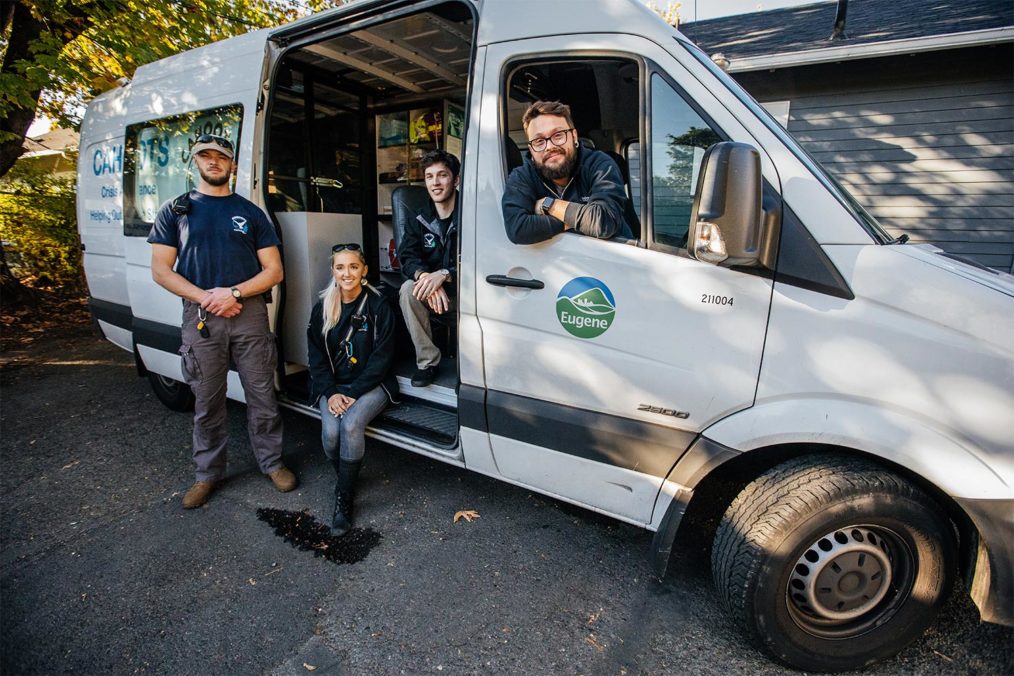
We are happy to announce that we received both first and second place recognition for “Best Program for the Homeless” in Eugene Weekly‘s annual 2018 Best of Eugene. CAHOOTS took first place and White Bird Clinic took second. Read more…

We are happy to announce that we received both first and second place recognition for “Best Program for the Homeless” in Eugene Weekly‘s annual 2018 Best of Eugene. CAHOOTS took first place and White Bird Clinic took second. Read more…
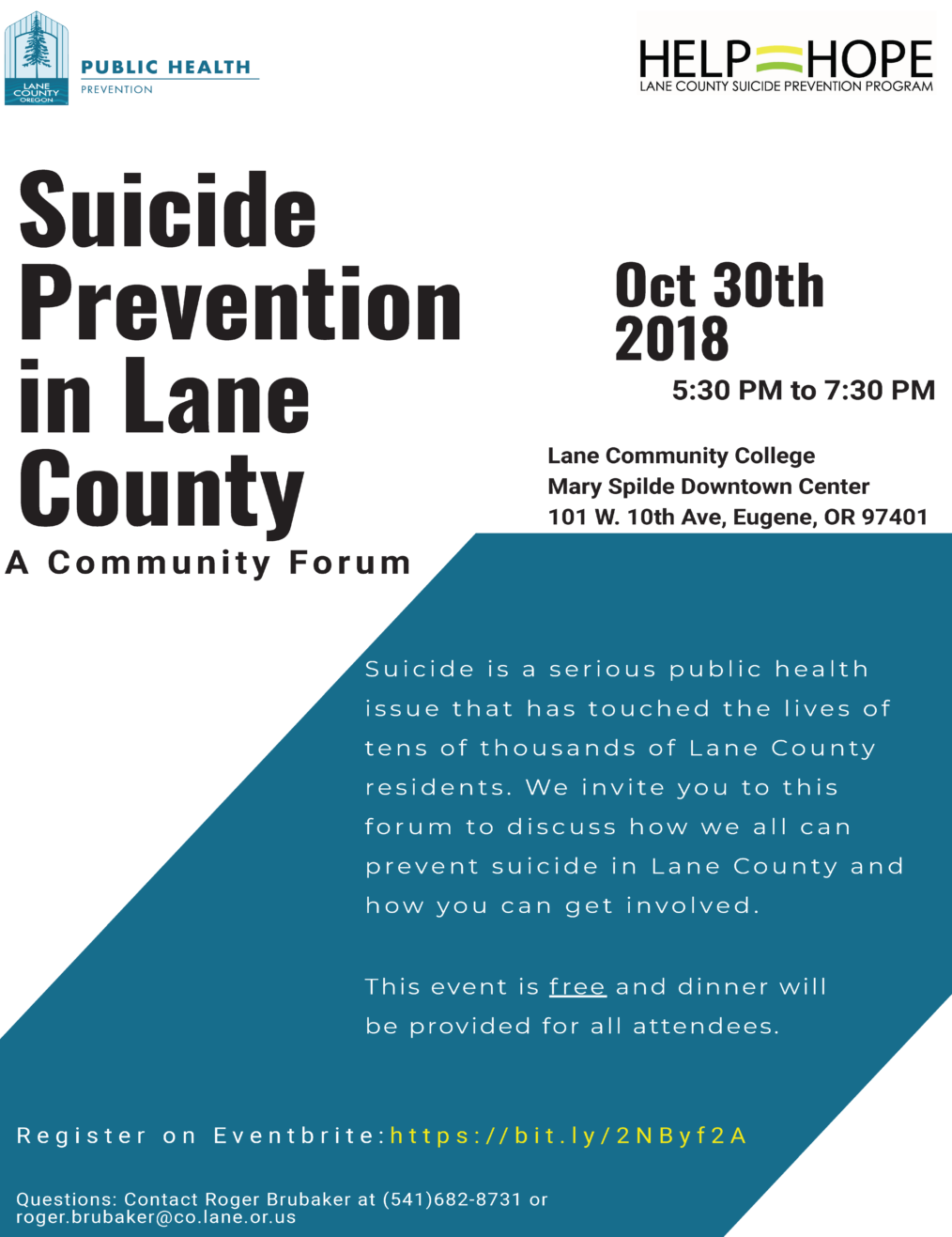
Suicide is a serious public health issue that has touched the lives of tens of thousands of Lane County residents. Effective suicide prevention requires the involvement of the entire community. We invite you to this forum to discuss how we all can prevent suicide in Lane County and how you can get involved. Click here to register for this Community Forum

This past weekend represented an unusually high number of heroin and other opiate overdoses in the Eugene/Springfield area, but these overdoses have been in keeping with recently observed trends. There have been two distinct patterns of heroin and other opiate related overdoses occurring with increased frequency: poly-substance OD’s and fentanyl contaminated OD’s:
Lane Co. EMS, EPD, SPD, and CAHOOTS all carry the opiate overdose reversing medication Naloxone, commonly referred to by its trade name, Narcan. Naloxone is administered to treat overdose patients presenting with respiratory distress caused by the overdose, the medication enters the respiratory center of the brain stem and flushes neural synapses by out-competing the opiates present in the blood stream to to temporarily reverse respiratory inhibition; for patients whose breathing has ceased Naloxone is frequently administered along with CPR.
CAHOOTS, specifically, has not experienced a significant increase in overdose responses, largely because the increased public awareness of the opiate crisis has increased the aggressiveness of EMS and law enforcement responses to these emergencies. White Bird’s main clinic staff including the Crisis Team and Front Rooms/Reception staff have, on the other hand, reported a significant increase in interventions this year, with three incidents of Naloxone and CPR administration in the past 2 months. White Bird has begun the process of standardizing Naloxone training for all staff in addition to First Aid and CPR requirements.
Locally, the increased frequency of opiate overdoses has not been accompanied by a proportionate increase in overdose deaths. Increased public awareness has led to increased public involvement, with bystander-administered Naloxone and CPR saving brain tissue and lives prior to professional responders arriving on scene, and with increased awareness of Oregon’s Good Samaritan Law amongst drug users reducing the fear and stigma associated with calling 911 to seek assistance in an emergency.
The lives saved have demonstrated the benefits of harm reduction policies:
The Eugene HIV Alliance, through their syringe exchange program, has made the injectable form of Narcan available. It also provides training to individuals and groups on how to administer it.
The syringe exchange is held five days a week at different locations, and the service is free.
When you walk in the Out of the Darkness Walks, you join the effort with hundreds of thousands of people to raise awareness and funds that allow the American Foundation for Suicide Prevention (AFSP) to invest in new research, create educational programs, advocate for public policy, and support survivors of suicide loss.
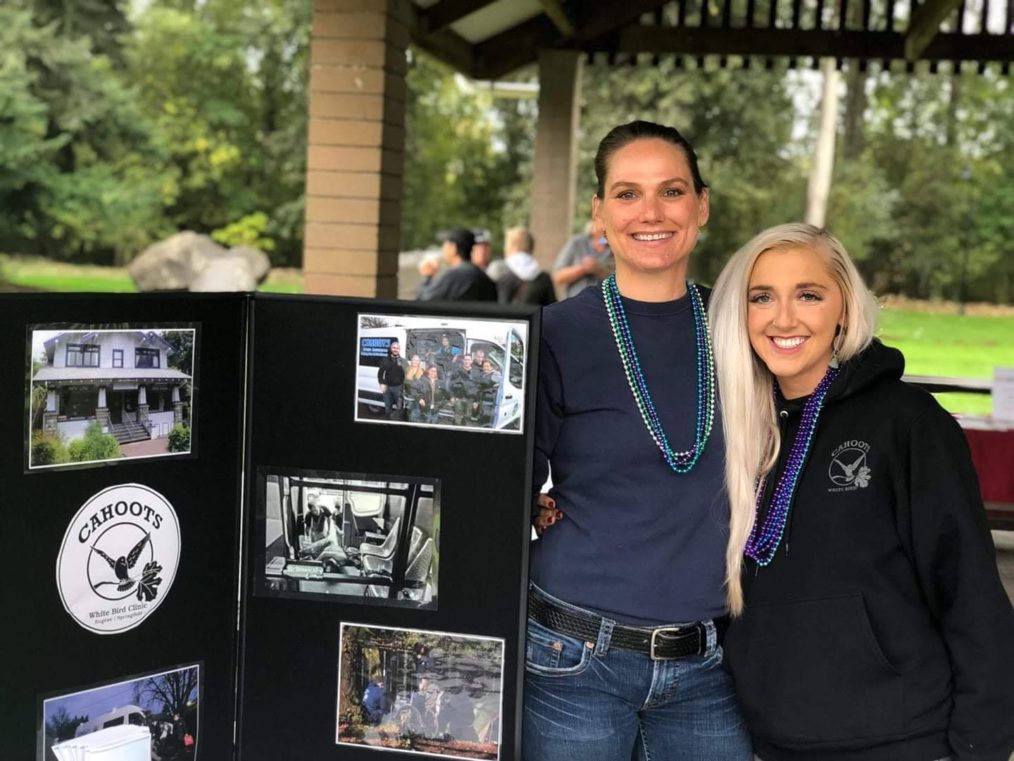
CAHOOTS will be tabling and answering questions about what services we provide and how to access them. We will also be facilitating a safe space for anyone struggling with emotions in reference to the event.
Walk Date: 09/30/2018
Walk Location: Alton Baker Park – Eugene, OR
Check-in/Registration Time: 09/30/2018 at 10:00 am
Walk Begins: 11:00 am
Walk Ends: 1:00 pm
Contact Name: Sara Scofield
Contact Phone: 541-513-5937
Contact Email: swhopner@yahoo.com
Online registration closes at noon (local time) the Friday before the walk. However, anyone who would like to participate can register in person at the walk from the time check-in begins until the walk starts. Registration is free and open to the public. Walk donations are accepted until December 31st.
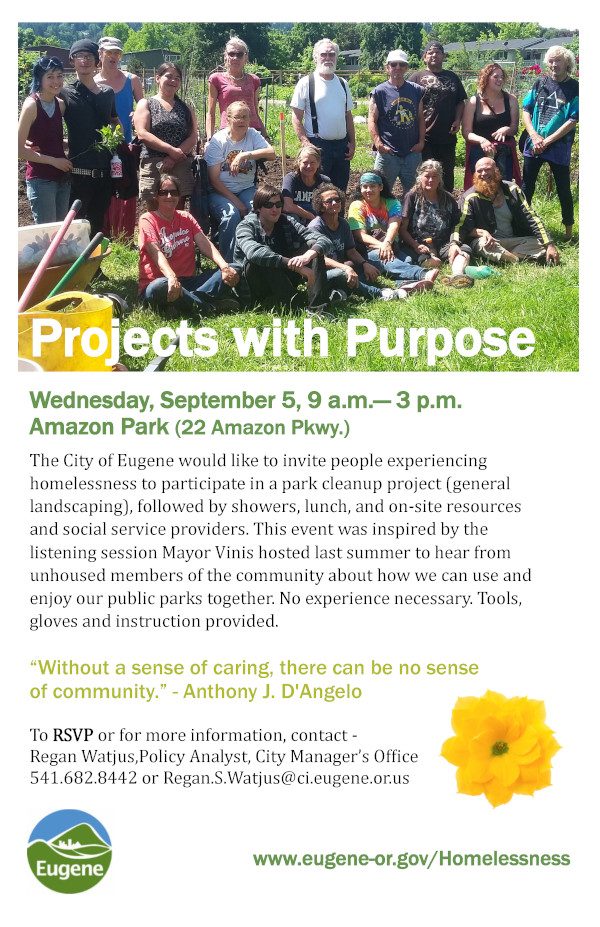
The City of Eugene would like to invite people experiencing homelessness to participate in a park cleanup project (general landscaping), followed by showers, lunch, and on-site resources and social service providers. This event was inspired by the
listening session Mayor Vinis hosted last summer to hear from unhoused members of the community about how we can use and enjoy our public parks together. No experience necessary. Tools, gloves and instruction provided.
To RSVP or for more information, contact Regan Watjus, Policy Analyst, City Manager’s Office at 541.682.8442 or Regan.S.Watjus@ci.eugene.or.us

Congratulations to CAHOOTS medic and crisis workers Rose Fenwick and Kimber Hawes, who were honored at a ceremony yesterday by the Eugene Police Department with the 2018 Partnership Award! Thank you for your care and compassion in serving our community.
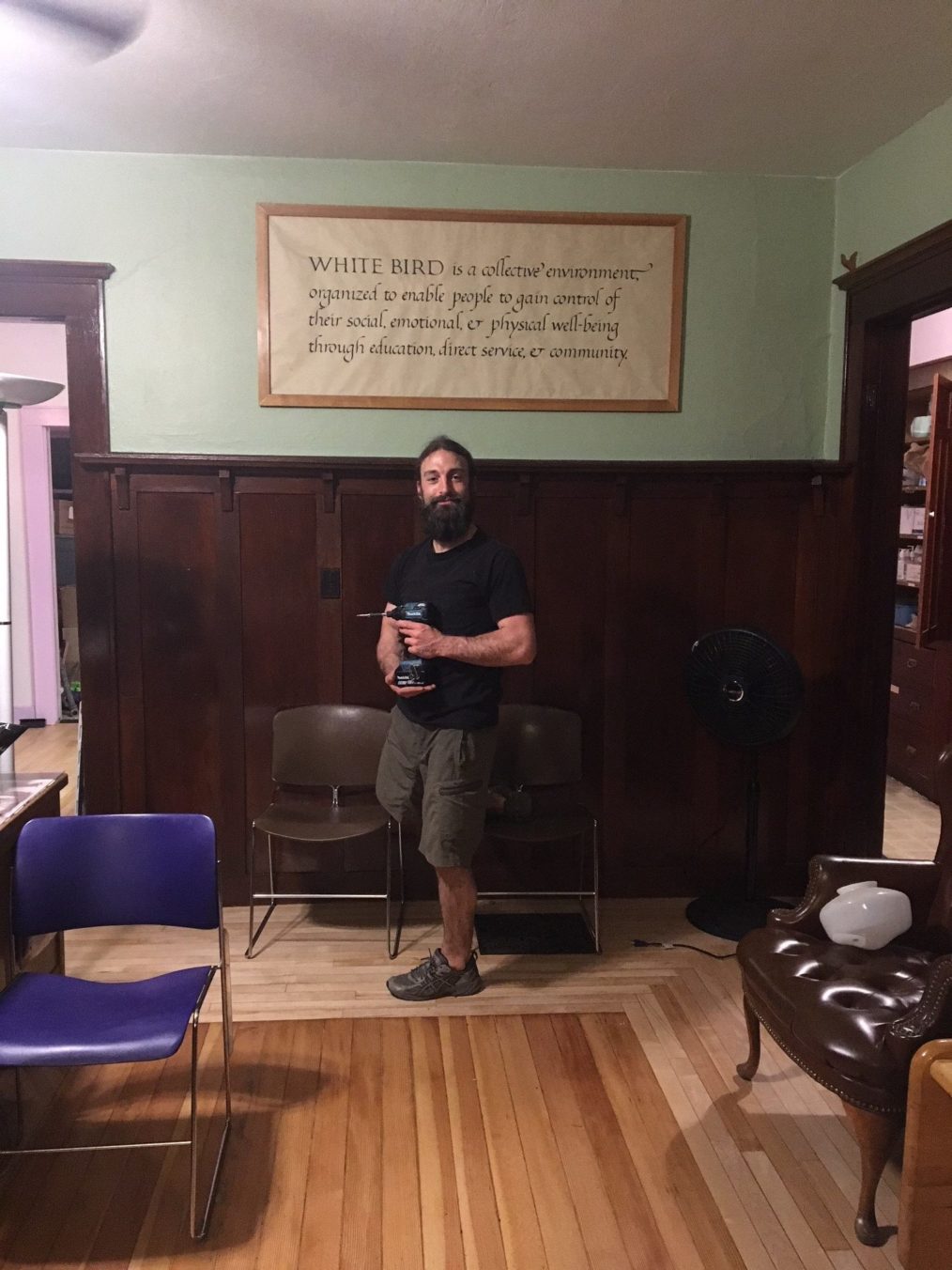
After two weeks of renovations, Front Rooms is re-open for business! We put a lot of TLC into our beloved old building, including a deep clean, floor renovation, wood restoration and a fresh coat of paint. All services are back open for usual hours, including mail, crisis walk-ins and homeless day-use services.
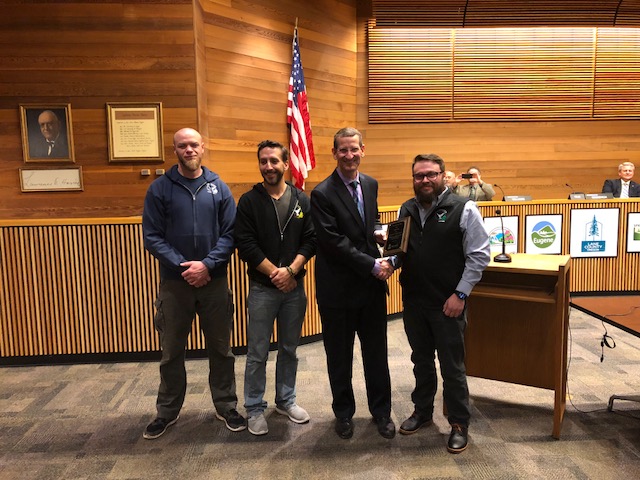
On April 10th, CAHOOTS was selected by the Lane County Board of Commissioners as a recipient of the 2018 Excellence in Public Health Award. The award was presented during the Commissioners’ meeting to recognize the CAHOOTS team’s work in the field as behavioral health first responders, as well as their efforts in outreach, training, education, and support for individuals and groups throughout the area.
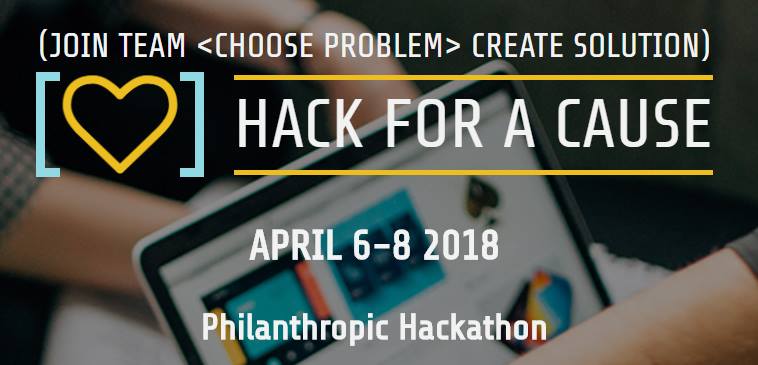
White Bird Clinic is excited to announce our challenge has been accepted for Hack for a Cause 2018! We’re looking forward to working with the Technology Association of Oregon and meeting our volunteers.
Contact us at info@whitebirdclinic.org.
We’d love to hear them. Want more information? Meet us at Tech Tuesday at the Barn Light, 3/27 from 5:30-7:30pm. Come say hi – we’ll be the ones in the White Bird shirts.
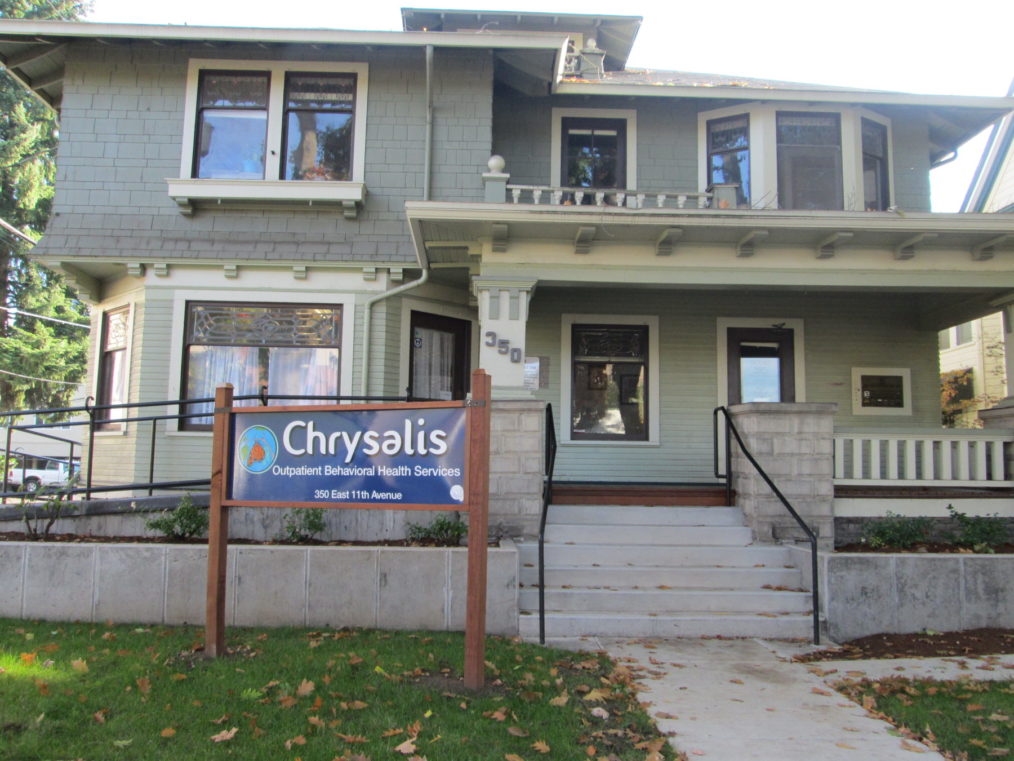
White Bird Clinic has recently started a medication assisted treatment program for opioid abuse and dependence and now have a suboxone prescriber. The White Bird Opioid Treatment Program is designed to support individuals who are breaking the chain of opiate use. The program connects clients with a suboxone prescriber and supportive services with our behavioral and mental health counseling services.
Once admitted into Chrysalis Behavioral Health Outpatient Clinic, a client will be connected with a counselor for weekly counseling sessions to support the client’s individual goals. The client will also have access to group counseling and other support services such as; an Acupuncture Clinic, Yoga, Tai Chi, and Peer Support. Chrysalis also has a specialized opiate group “The Ethos Group.” Where individuals can find a supportive environment with others who are also breaking the chain of opiate use and discuss specific issues related to opiate use. Once a client has been assessed for medication assisted treatment appointments with our medical provider will be arranged for suboxone services. Weekly counseling sessions along with weekly medical appointments will be required for suboxone maintenance.
To enroll in the White Bird Opioid Treatment Program call 541-683-1641 or come by our office at 350 East 11th Avenue Eugene, Or. and ask for our data packet. Once the new client data packet is completed an intake can be scheduled. There will also be a mandatory TB test required for scheduling an intake and that can be performed at our White Bird Medical Clinic or at an individual’s primary care doctor’s office if they currently have a primary care doctor.
Th White Bird Opioid Treatment Program has reserved slots for homeless individuals to ensure services are provided to those who need it most. There are also a select number of slots for individuals who are not experiencing homelessness. We accept OHP and have funding for scholarships for individuals who do not have insurance. If you have any questions feel free to give us a call at 541-683-1641 or come by our office.

Living on the streets is even harder without a sleeping bag. Thanks to a generous donation from the Jill Heiman Vision Fund, White Bird Clinic greatly increased our supply of cold weather gear during the coldest months of 2017-2018. When the weather turns to rain and sleet, unhoused residents of Lane County come to our clinic seeking warm clothing and bedding. We used funds to bulk order some of our most requested items.
Tarps, sleeping bags, socks, gloves, and hats are vital for people living outdoors in cold weather. White Bird collects donated items every year from community partners and supporters, but these unfortunately are never quite enough to meet community need. The Jill Heiman funds enabled us to buy items efficiently, in large quantities. We purchased 480 tarps, 320 sleeping bags, 2,550 pairs of socks, 240 pairs of gloves, and 240 knit winter hats. Most of these items have already been dispersed to folks in need, and the remaining stock will be depleted well before the cold weather ends.
Three of our departments distributed the grant funded purchases. Front Rooms, a respite and light day use resource in Eugene, distributed most of the items. Case managers from the Homeless department accessed gear for their clients. Some supplies, particularly sleeping bags, were distributed by CAHOOTS (Crisis Assistance Helping Out on the Streets), White Bird’s mobile crisis service. The people who received gear were mostly unhoused residents in neighborhoods on the east side of Eugene, though some reached people in the greater Eugene/Springfield metro area.
White Bird is a collective environment organized to enable people to gain control of their social, emotional and physical well-being through direct service, education and community. We greatly appreciate the kind and expedient support we’ve received from the Jill Heiman Fund both for this project, and in the past. You helped us provide critically needed winter wear for Lane County’s unhoused and underserved community members.
Many thanks to the Jill Heiman Fund Committee and our beloved Fair Family!

Following recent events at the Academy of Arts and Academics in Springfield, counselors from CAHOOTS and White Bird Clinic’s Crisis office responded to the school to provide grief and loss counseling to students, staff, and their families. An extension of the weekly Mobile Mental Health Resource Clinic already staffed by members of the CAHOOTS team, these counselors facilitated both individual and group counseling and will continue to work with A3 and the Springfield School District to support everyone affected by this tragedy.
CAHOOTS mobile crisis counseling services are available in Springfield 24 hours a day, 7 days a week, and can be requested via Springfield Police non-emergency dispatch at (541)726-3714.
Additional crisis support is also available 24/7 by phone at (541)687-4000, or walk-in at White Bird’s Crisis clinic, 341 E. 12th Ave in Eugene.
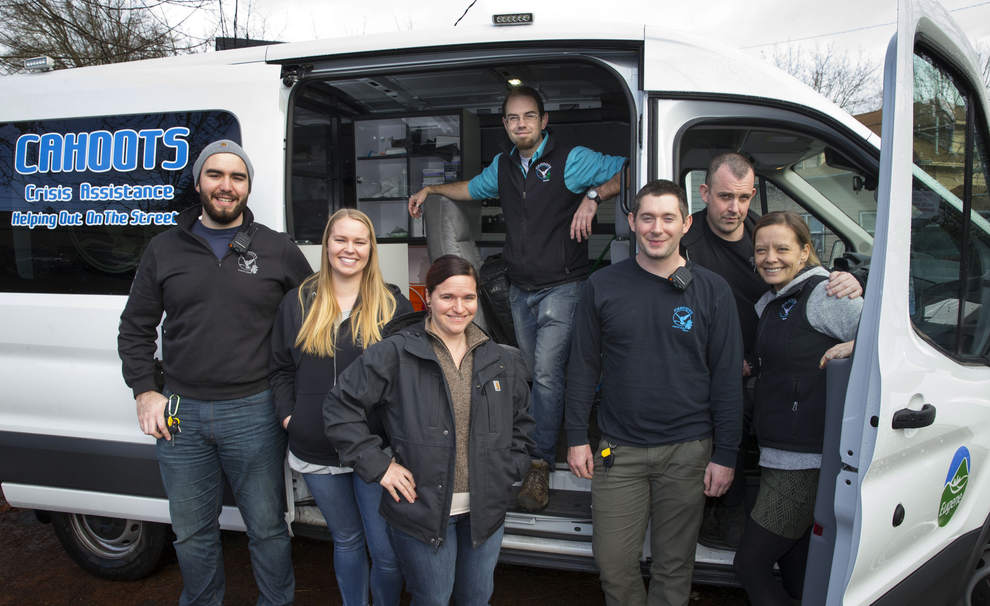
The CAHOOTS (Crisis Assistance Helping Out On The Streets) program began in Eugene in 1989 as a collaboration between the city of Eugene and White Bird Clinic.
CAHOOTS started small: one van equipped with medical supplies and trained personnel, operating part-time in Eugene. Its mission was simple: to offer help to individuals and families, housed and unhoused, in crisis.
The idea was that it would be better — and cheaper — to have people trained and experienced in counseling and medical care to respond to these calls, which had been going to police and fire departments.
The wisdom of that decision has been amply borne out since then by CAHOOTS’ exponential growth over the last three decades and the place it has made for itself in the Eugene-Springfield community.
It has more than tripled its local presence with two vans in Eugene and one in Springfield, and gone from part-time patrols to 24-7 service.
The two-person teams that staff each van respond to an average of about 15 to 16 calls in a 12-hour shift in Eugene, although it can be as many as 25 calls per shift — slightly less in Springfield, CAHOOTS employee Brenton Gicker says, which works out to tens of thousands of calls per year.
Gicker is a registered nurse and emergency medical technician; his partner on a recent night, Maddy Slayden, is a paramedic.
They and their co-workers are a welcome presence on the streets of Eugene-Springfield, greeted with warmth by police officers, with relief by business owners who prefer the option of calling CAHOOTS to calling police, and with respect by the people they help.
CAHOOTS is a significant part of the network of organizations and agencies that provide help to the growing number of people who are homeless locally — about half of CAHOOTS’ calls are to help someone who is homeless, ranging in age from children to seniors.
The CAHOOTS teams have earned respect in the homeless community not just for the help they provide — from distributing socks and bottles of water to emergency medical care and help accessing resources such as medical treatment and emergency shelter — but by the way they do it.
The CAHOOTS employees offer dignity and courtesy, which are often in short supply for people who are homeless.
A typical shift — if there were such a thing — for a CAHOOTS team might include responding to a call about a homeless person disrupting a business; working with a family in crisis; helping someone who is suffering from substance abuse, mental illness or developmental disabilities access services and find safe shelter for the night; treating injuries; picking up people who are being discharged from a hospital or clinic with no place to go and taking them to a safe place where they can get help; and responding to a call from a landlord worried about the welfare of a tenant.
They are trained to address issues such as mental illness or substance abuse and skilled in coaxing people to agree to get the help they need.
Many of their calls involve driving people who are suffering from mental illness or substance abuse to an emergency
room or, if their problem doesn’t merit medical care, to a safe place to spend the night.
Despite more than tripling the size of CAHOOTS in the past few years, the need for its services continues to grow faster than CAHOOTS’ resources.
“I’m frustrated because we can’t be everywhere at once,” Gicker says. “There’s always things we’d like to be involved in, sometimes we don’t have the resources we need, or access to information. I feel like we’re often only scratching the surface.”
CAHOOTS is a uniquely local response to local needs — people familiar with the program say they don’t know of anything quite like it elsewhere.
Its growth in recent years has shown the need for its service; the response within the community, its ability to meet them given the resources.
It’s time to start thinking about expanding a program that has been successful and that serves a need that continues to grow.
Ideally, adding another van would be a step toward meeting this growing need, as well as allowing expansion of service to areas such as Santa Clara and Goshen that have few resources. It also would allow CAHOOTS staff to respond more quickly to calls seeking help, reach more people who are in need of help, and spend more time working to connect people with the resources they need.
It’s hard to put a dollar value on what CAHOOTS does — how do you determine, for example, how many people didn’t die on the streets because of CAHOOTS? How many people who were able to get help that allowed them to stabilize their lives, or medical care that relieved suffering? How do you quantify exactly how much taxpayer money was saved by using CAHOOTS instead of police or firefighters, or the value to businesses of knowing they can call CAHOOTS for help?
But the role the CAHOOTS teams play in Lane County is a critical one, and likely to become even more critical in the coming years.
This editorial is part of a Register-Guard series focusing on productive responses to homelessness reposted with permission from http://registerguard.com/rg/opinion/36272835-78/helping-people-in-crisis.html.csp